
23 March – Reading – Tatreez Palestinian Embroidery Workshop

Mon 23rd March @ 4:30 pm6:30 pm
Reading International Solidarity Centre

Cost: £20

Booking essential – see below

“Join Women in Hebron in a workshop dedicated to the art of traditional Palestinian
embroidery, tatreez.

This centuries-old craft is a vital expression of Palestinian cultural identity, with each motif reflecting regional history, heritage & social tradition. Followed by talk at 7pm – Sale of Palestinian crafts & free snacks.
info: shaheen@bigardens.org or events@risc.org.uk
Hosted by British Islamic Gardens (BIG) & RISC
£20 including materials; payment at the door
BOOKING IS ESSENTIAL
www.eventbrite.co.uk/e/palestinian-embroidery-tatreezworkshop-tickets-1983257218729″

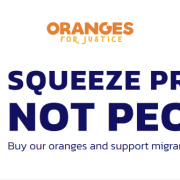
Oranges for Justice – An interview with Karen Crooks and Tom Hilton

When Karen Crooks visited Calabria and saw the difficulties faced by many migrant workers … and the way that the Mani e Terra cooperative was seeking to do the right thing by the people who worked for it, she had “a lightbulb moment”. Would it be possible to educate people in the UK about the exploitation that was taking place … and how they could support people who were doing things differently?

Fast forward a few years and Karen and Tom Hilton, founding directors of Oranges for Justice, speak about how they founded Oranges for Justice, what the challenges and joys have been, their vision for the future … and what it means to navigate four pallets of fruit in your garage.

Listen to the interview:


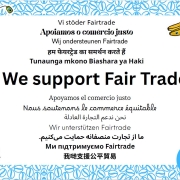
Pentecost Fair Trade Poster

Our poster is a reminder that we celebrate Fair Trade alongside Christians from around the world. Display it for Pentecost – or use it more generally, as it welcomes people from a variety of countries!

Pentecost Fair Trade

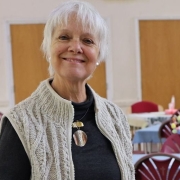
CCOW Podcast – Interview with Margaret Dykes

“We were brought up in a household of justice and fairness, and Fair Trade ticked those boxes….”

Margaret Dykes was awarded the BEM for her work with Traidcraft. A longstanding Fair Trader, she shares an inspirational story about how and why she got involved, why she thinks Fair Trade matters, and how Christians can pray and act to take it forward.

Listen here:

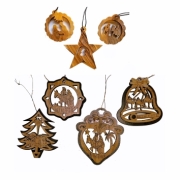
A prayer for Bethlehem

You might wish to say this as you hang one of the Palestinian ornaments on your tree … or at any time during the Christmas season.

Lord Jesus Christ,
Born in the town of Bethlehem,
Where today there is no celebration of Christmas
Except in the hearts of your people:
Grant that those who celebrate in their hearts
May be filled with a sense of your peace and joy.
Hasten an end to all conflict
And through your healing presence and transforming love
Bring all people to live together in harmony
To the glory of your name.

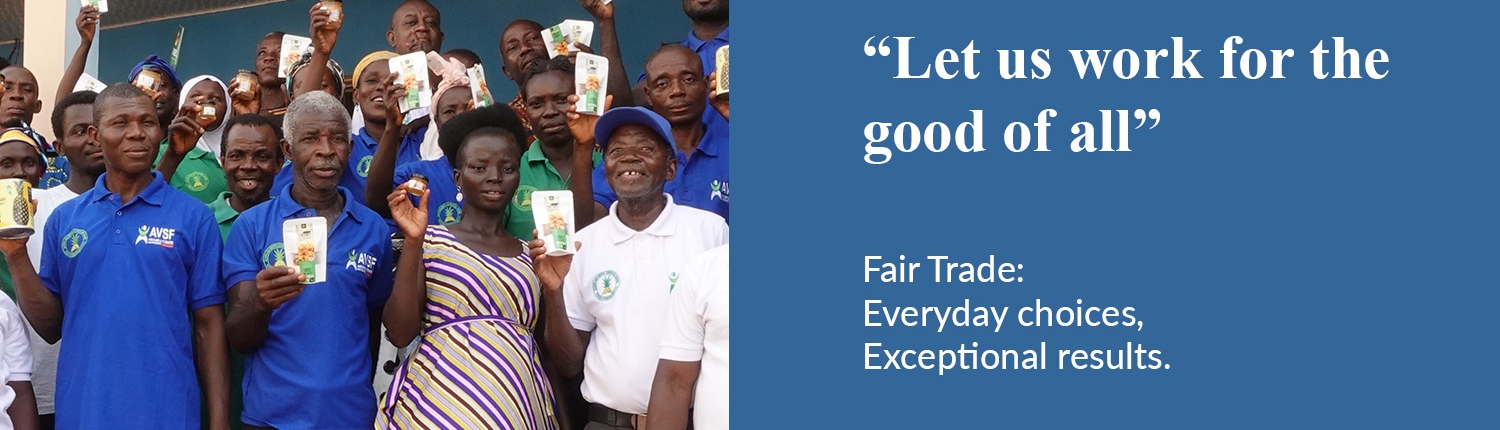
“Let us work for the good of all”

This year, CCOW’s Fairtrade Fortnight campaign has two messages: “Let us work for the good of all” (Galatians 10:6a) and “Fair Trade: Everyday choices, exceptional results.”

The two messages reflect what we heard from Fairtrade farmers in Ghana, whom we visited just before Fairtrade Fortnight started.

As we travelled, we saw and heard about the extraordinary difference that everyday choices to buy Fairtrade products had made.

What elements of Fairtrade were making the difference? One was the Fairtrade minimum price, which is often considerably higher than the amount of money farmers generally get for their products. It’s money that goes directly to the farmers, and the increase in income gives them the ability to do things that would otherwise be impossible. We met a cocoa farmer in a remote village, for example, who told us proudly that he had used the cocoa money to educate his daughters so that they could all become nurses.
Fairtrade premiums were a second important changemaker. The Fairtrade premium is money, based on volumes of sales, that goes to Fairtrade cooperatives to be used for community development. For example, Ghanaian cocoa cooperatives receive $240 for each metric tonne of cocoa their members sell on the Fairtrade market. Organic, fresh pineapple in Western Africa commands a premium of 5 cents/kilogramme.


Each cooperative’s members themselves decide how their premium money will be spent. We met women pineapple farmers who had their own farms, supported by their cooperative’s initiatives to help women enter the market. We met citrus farmers whose cooperative had enabled them to undertake more environmentally friendly methods of production.  And we heard how cooperatives had used their Fairtrade premiums to set up schools, health clinics, toilet facilities – even banks and transportation services – in underserved rural areas.

A third key element of Fairtrade is empowerment. Fairtrade isn’t just about finances – it’s about giving producers more agency and access to knowledge. As we travelled, we heard about the work being done by Fairtrade Africa to help farmers implement the new Fairtrade cocoa standards and to improve their farming and business techniques. We saw Fairtrade-certified farmers starting new programmes in dynamic agroforestry, mixing different crops so that they would have income throughout the year, not just at the time of the cocoa harvests.

It was inspiring stuff – and great to know that we, as consumers, had played a part in making these developments happen. Our everyday choices are truly enabling producers to create exceptional results.

But at place after place, we also heard a message of concern, particularly around cocoa. In recent years, the market for Fairtrade cocoa has contracted, and this has had an impact. The cocoa farmer who had funded his daughters’ education was part of a cooperative that no longer had a Fairtrade buyer: as a result, they told us, instead of $240/metric tonne premium, they were now getting $80. Many farmers told similar stories.  Alongside the pandemic, climate impacts, and inflation – which have hit everyone hard – they had reduced prices and premiums. This meant less money to spend on improving life for their families and communities. While they maintained their certification, citing both the hope of Fairtrade buyers and the support that the network gave, many were clearly finding life difficult.

Here in the UK, there can be a sense that we the work of Fairtrade is accomplished. Much has indeed been done, and we can celebrate that … raise high the mug of Fairtrade cocoa or the bar of Fairtrade chocolate!

But if we no longer press companies to stock Fairtrade products and no longer buy them ourselves – if we no longer explicitly take the time to show companies that we care about the people who are behind the products we use – the farmers will lose out. Because the imbalances of power that first spurred Fairtrade’s formation are still there.

The International Fair Trade Charter defines Fair Trade as “a trading partnership, based on dialogue, transparency and respect, that seeks greater equity in international trade. It contributes to sustainable development by offering better trading conditions to, and securing the rights of, marginalized producers and workers – especially in the South.

Fair Trade Organizations, backed by consumers, are engaged actively in supporting producers, awareness raising and in campaigning for changes in the rules and practice of conventional international trade.”

Fairtrade works. But it only works if we continue the partnership alongside the producers.

The longer quote from Galatians is this: “Let us not grow weary in doing what is right, for we will reap at harvest time if we do not give up. So then, whenever we have the opportunity, let us work for the good of all ….”

This Fairtrade Fortnight, can you and your church recommit to Fairtrade?


  • For more information on using Fairtrade in your church, see our handy guide. It includes suggestions for ordering goods that you used to get from Traidcraft.
  • For information on Mothering Sunday and Easter gifts that support Fairtrade, look here. We would particularly encourage you to gather orders at your church for ‘The Real Easter Egg’. Deadline is 22nd March – so there’s still time!
  • Could you write to a company that isn’t using Fairtrade cocoa, asking them to switch? Email us for a template letter.


Linked Lectionaries for Fairtrade Fortnight 2022

For those churches that use the Revised Common Lectionary, the Sundays of Fairtrade Fortnight in 2022 use the readings for Transfiguration Sunday and the 1st Sunday in Lent (Year C)

Here are some suggestions for reflection and preaching on those readings. The suggestions for the 1st Sunday in Lent are reproduced from the Fairtrade Foundation’s Church Action Guide in 2010 and were written by Elizabeth Perry. They are no longer available online – hence we have placed them on this page, rather than linking to them.

Transfiguration Sunday (last before Lent)

Exodus 34:29-35

Moses brings the ten commandments down from Mount Sinai – and his encounter with God is reflected in the shining of his face.

Psalm 99

‘Mighty King, lover of justice, you have established equity; you have executed justice and righteousness in Jacob. Extol the LORD our God; worship at his footstool. Holy is he!’

2 Corinthians 3:12-4:2

The hope we have in Christ transforms us; through Christ we are able to see God; and by the Spirit we are transformed

Luke 9:28-36, (37-43a)

Jesus is revealed as the fulfillment of the law and the prophets, and the one to whom God commands us to listen. After this revelation, he shows his power through a miracle of healing.

Points to ponder

In the Transfiguration, Jesus is revealed as the one who is both truly God and truly man – the Son of God, the Chosen. The revelation is a sudden one: like Moses, Jesus has gone up the mountain to commune with God, and as he prays, his appearance in transformed, and he, Moses and Elijah talk ‘in glory’.

God’s holiness, as the psalmist reminds us, is truly awesome – that is, it inspires awe and wonder. It is so awesome that after the Fall, direct encounters with God in the Hebrew Scriptures are rare: they are simply too overwhelming for all but a very few. Even indirect contact can be overwhelming: Moses, is so transformed by his encounter with God that people are afraid to come near him.

But Christ, the Emmanuel – God with us, makes the presence of God accessible. While he remains the awesome figure of the mountaintop, he is also the teacher, friend and companion of the disciples along the way. And he shows them – and us – what a human life united with God, reflecting God’s love, should look like.

And, says Paul, his gift to us is the hope of transformation. As we turn to the Lord, we see God and we receive the Spirit of freedom. This Spirit works to transform us into the same image, the image of God’s glory. It’s not something to be afraid of, but to be longed for. And the transformation doesn’t separate us from the world, but helps us to bear the image of God’s love into it, as Christ did.

Where do you see evidence of the Spirit’s transformation?

For us, the existence of Fair Trade is a sign of such transformation. People around the world are united in care for each other and for God’s creation. People who are buying goods make conscious choices based on love of their neighbour, a love which springs from God. In very simple, ordinary ways, they are bringing the image of Christ’s love into the world.


1st Sunday of Lent

Deuteronomy 26: 1-11
‘The Lord heard our voice and saw our affliction, our toil, and our oppression.’ The Israelites are instructed to remember their past, tell the story of their journey, and acknowledge their continued dependence on God.

Psalm 91: 1-2, 9-16
Trust in the Lord to deliver and protect.

Romans 10:8b – 13
Confessing Jesus as Lord with our mouths and hearts

Luke 4:1-13
Jesus rejects personal satisfaction, power, and spectacle (and the misappropriation of Scripture) for the worship and service of God – and then goes on to proclaim that his concern is for the poor and oppressed.

Points to ponder

We too need to remember our story and past. Part of our past is the appalling history of many tropical commodities such as sugar – a story that involves exploitation and slavery.

But we also need to tell the stories of people who have stood up for justice – to remember how people of faith have helped release people from oppression down the centuries and across the continents, helping abolish the trans-Atlantic slave trade and apartheid. And we need to tell today’s good news story that is Fairtrade and rejoice in the way Fairtrade is transforming history.

Jesus lived a radically different way of identification with the poor and marginalised. One small way in which we can follow Jesus in our daily lives is to swap to using goods that have been fairly traded. These bring good news to the poor and do not compromise us in oppression. This is also a practical way of confessing Jesus as Lord with both our mouths and our hearts.

So as part of your Lenten seeking after righteousness, why not do something positive by swapping to the Fairtrade alternative?

Fair Trade Events

Communicating Fair Trade