Refugee Support Newsletter – March 2018

  • Partnerships of Hope – 21st April

  • News from local groups

  • New developments and resources

  • Upcoming events and actions

PfH Poster

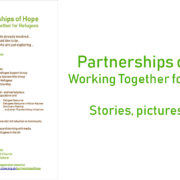
Partnerships of Hope – 21st April

Whether you’re already involved in supporting refugees, would like to be or are just exploring, this event organised by Christian Concern for One World is for you. A range of groups and organisations from across the Thames Valley will be participating in a programme which will include speakers, workshops on topics such as community sponsorship and working with the media, and stalls. It’s a great opportunity for information, networking and encouragement. Free to attend, £5 with lunch. Registration essential – go to www.ccow.org.uk/ww37521/events/partnerships-of-hope. For further information please contact Joanna Schüder, CCOW’s Refugee Networking Officer on joanna@ccow.org.ukor 07823 686568.

News from Local Groups

Asylum Welcome

Asylum Welcome is currently dealing with several people who are street homeless and who have been very glad to be in their cosy offices during the day. They are making them hot food in addition to the usual food parcels. Items currently needed for Asylum Welcome’s foodbank: 1L cooking oil, UHT milk, 1kg sugar, toiletries, nappies, 1 kg flour, long life juice, dried fruit and nuts. Asylum Welcome is also running an allotment, so if anyone is in touch with refugees who like growing things, then please put them in touch with John Fenning at Asylum Welcome. Contact him also about the Adopt a Room scheme, whereby an individual or group can commit to kit out one room in a house for a newly arrived refugee family

Marlow Refugee Action Group

in collaboration with Churches Together in Marlow and Churches Together in Maidenhead has an initiative, reported in the local press, to encourage volunteers to help refugees in Calais over the period of Lent by serving in the kitchens and warehouse there for a few days. 22 people have signed up so far.

New Developments and Resources

Hope for more refugee children to come to UK
Following an agreement between the UK and French governments at the end of January unaccompanied refugee children who arrived in Europe between March 2016 and January 2018 will now also be eligible to come to the UK under the Dubs scheme.

Immigration policy report highlights changes needed 
After eighteen months of considering evidence the Home Affairs Select Committee recently published its report Immigration policy: basis for building consensus. It recommends that the government proactively challenge myths and inaccuracies about immigration, honour its commitments to unaccompanied child refugees and establish a permanent Vulnerable Persons Resettlement Scheme.

New Resource on Refugees and Mental Health
City of Sanctuary has produced an excellent information pack designed to help people understand the journeys that refugees and asylum seekers have been through that put pressure on their mental health. It includes advice and resources for helping refugees with mental health problems.

Seeking Reform of Family Reunion
Oxfam and the Refugee Council have published a new report “Safe but not Settled: The Impact of Family Separation on Refugees in the UK”. It calls for the government to expand the qualification criteria for family reunion.

Human Flow film by Ai Weiwei
If you missed the recent screenings of this powerful documentary on global migration and would like to show it at a church, school or group you can register your interest with the producers.

New Book about Syria
New book about Syria For those interested in learning more about the history of Syria as a land to which refugees came and now which refugees are leaving, Dawn Chatty has written “Syria – The Making and Unmaking of a Refuge State.”

Upcoming Events and Actions


Sunday, 17 March – Refugees Welcome Bloc at the March against Racism

Saturday, 7 April – Sanctuary Hosting volunteer information day

Saturday, 21 April – ‘Partnerships of Hope: Working Together for Refugees

Friday, 11 May – Quiz and Raffle for Witney Refugee Action

Sunday, 20 May – ‘Bike Oxford to Support Asylum Welcome

The CCOW events calendar is updated regularly with events of interest on this and other topics. Take a look!

Refugee Support Newsletter – December 2017

In this newsletter

  • New developments and resources

  • News from local groups

  • Upcoming events and actions

New developments and resources

New Refugee Officer

In CCOW’s work on migration and refugees, we realised that many churches are keen to engage with the people and wider issues involved, but need personal support and contact with a network. So after discussions with others in our area who are working with refugees we developed the new role of Churches Refugee Networking Officer. Joanna Schüder works ten hours a week in the new post. You can contact her on joanna@ccow.org.uk or 07823686568

CCOW website

A new section of the CCOW website focuses on refugees and forced migration. It includes: an interactive map showing where refugee support groups in the Thames Valley are located, information about refugees and ways to support them, inspiring case studies of local groups, and a Guide to Online Worship Resources. We hope it’s useful: let us know what you think.

Welcoming Syrian refugees

This downloadable brochure from Citizens UK and others is full of helpful guidance on all steps of community organisation and also offers a link to many further useful documents and templates. Highly recommended.

Foundation for Community Sponsorship of Refugees

In July 2016, the Government launched the community sponsorship scheme, which allows community groups to take on the responsibility of resettling refugee families. On 9th October Citizen’s UK launched Sponsor Refugees, their Foundation for Community Sponsorship of Refugees, which offers support and training for faith and community groups considering or going through the process of becoming a community sponsor. Their website has information on this support, as well as stories of what groups involved are doing.

New research and analysis by Refugee Action  

New research has found that there is inadequate English language provision nationally for refugees, with people having to waiting months, even years to start ESOL classes. Refugee Action is calling on the Government to commit to providing a minimum of eight hours per week of ESOL lessons, to which resettled Syrian refugees are already entitled, for all refugees in Britain.

Refugee Action has also analysed the latest Home Office figures on immigration. They find that as of September 2017,  9,394 people had been welcomed through the government’s Syrian refugee resettlement programme, putting Britain on track to meet its target of welcoming 20,000 Syrian refugees by 2020. But despite asylum applications overall falling by 21% year on year, the number of people waiting for more than the Government’s target of 6 months for a decision on their claim has risen by 27% to 10,552 … nearly half of all claimants.

News from Local Groups

Wycombe Refugee Partnership

has been awarded one of two 2017 Wilson/Hinkes Peace Awards in recognition of their work resettling refugee families. This was followed by another peace award – from the World Peace Flame Foundation. Congratulations to Wycombe Refugee Partnership and all its volunteers.

Brightwell Supporting Refugees

At the beginning of September, some members visited the schools for Syrian refugee children in Jordan which the group is supporting. They met refugees and charity workers, took donated laptops and tablets which are now in use in the classroom, and gained deeper insight to inspire and inform the group’s work.

Marlow Refugee Action

celebrated its first anniversary in October and launched its Winter Aid Appeal. It’s asking for funds for winter boots for refugees in northern France and for donated items that will go to refugees across Europe and the Middle East.

Faringdon Syrian Refugees Group

has now helped to set up the 8th house for Syrian refugees in the Vale of White horse and South Oxfordshire area. They are working with the Red Cross to help the families arriving under the government’s Syrian Vulnerable Persons Resettlement Scheme.

Witney Refugee Action

held Asylum Sounds, a fantastic community festival with music, food and fun, showing welcome to the resettled refugee families.

Churches in Bicester Refugee Support Group

has started planning to buy, in shared ownership, a house in Bicester to accommodate Syrian refugees. Investors have already raised much of the capital, but they are still looking for some people who can invest at least £5,000 for 5 years.

Upcoming Events and Actions

The CCOW events calendar is updated regularly with events of interest on this and other topics. Take a look!

This email is sent by Christian Concern for One World.(CCOW), The Rectory, Church End, Blewbury OX11 9QH to  people who have expressed an interest in receiving information about our work with refugees.

Subscribe

Information Sources: Refugees and Forced Migration

Where can you find …

Facts, figures and research relating to refugees

British Red Cross
Facts and figures about refugees and asylum seekers.

City of Sanctuary

Definitions, links and resources by theme, including an excellent information pack on the journeys that refugees have been through that put pressure on their mental health.

International Organization for Migration (IOM) 
Offers a range of information from basic glossaries of terms to policy studies, news reports and migration data – well worth exploring.

Migration Observatory
Based at Oxford University’s Centre on Migration, Policy and Society (COMPAS), Migration Observatory provides reports and briefings on various migration-related topics.

Refugee Council
The Refugee Council is a national charity supporting and advocating for refugees. Here you can find policy briefings, statistics, facts, training and a glossary of terms & definitions.

Refugees Reporting
A project of the 
World Association for Christian Communication – Europe(WACC Europe) and the Churches’ Commission for Migrants in Europe (CCME), to assess media portrayal and representation of refugees in eight European countries, engage with media professionals to highlight good practices; and develop action plans to promote the rights of refugees to communicate on their own behalf. Some very interesting research.

Refugee Studies Centre
Part of the Oxford Department of International Development at the University of Oxford, it seeks “to build knowledge and understanding of the causes and effects of forced migration in order to help improve the lives of some of the world’s most vulnerable people” Website offers access to a range of research across several key areas of refugee studies.

UNHCR
The United Nations Refugee Agency offers a huge range of information – everything from a “Figures at a Glance” page to detailed studies of refugee situations in particular locations.

UNICEF
Focuses on defending the rights of children – includes work on children who are forced to migrate.


News relating to refugees

Most of the sites above have news sections – and the major serious newspapers have done some excellent detailed reporting. In addition, you might wish to look at:

Jubilee+ Refugee Network

This project, which provides resources for UK churches and individual Christians, offers occasional roundups of refugee news.

Medecins sans Frontieres/Doctors without Borders (MSF)
Has a wide range of material because of its work providing rescue, medical care, and sanitation for refugees around the world – often an important place for news about recent developments.


Care for Creation, Crisis for Rohingya, Prisons Week, Kenya: 8 to 14 Oct 2017

In this week’s prayer email:

  • Prayer for Creation
  • Crisis for Rohingya
  • Short Notes: Prison Week, Kenya, Keep on …

____________________________________________________________________________

Prayer for Creation

The 4th of October was St Francis’ Day, when many churches recall the saint who so beautifully expressed the way Creation reveals – and revels in – God’s love and glory. In honour of that, we’re releasing Elizabeth’s new prayer powerpoint of Pope Francis’ ‘Prayer in union with creation’.

It’s available to download from our website: we hope it will be a blessing to you and those with whom you share it.

Crisis for Rohingya

Long-time readers of the prayer email will know that concern for the Rohingya Muslims in Myanmar’s Rakhine State has been escalating for some time.

The group are in an area which has been a source of contention for centuries. Since Burma became independent in 1948, the Rohingya have experienced discrimination, and the majority were effectively rendered stateless by the government of Myanmar when citizenship laws were revised in 1982; they are not on the list of indigenous ethnic communities eligible for citizenship and their language is not recognised as an official language. The government labels them ‘Bengalis’ and, despite the fact that some Rohingya have lived in Rakhine State for centuries, it (and others in the country) regard them as having immigrated illegally during the time of British rule from the area that is now Bangladesh. In recent decades the Rohingya have repeatedly suffered the destruction of their property as well as violence against individuals, families and communities. On several occasions, there have been episodes of mass forced displacement: in both the late 1970s and early 1990s hundreds of thousands crossed the border to Bangladesh to escape intense government persecution. In both instances, many were subsequently repatriated.

In the past few years, persecution has again intensified. There was significant violence in 2012, followed by the creation of structures of repression, and a significant outbreak of violence again in Autumn 2016. In December 2016, we noted that: “With [part of Rakhine State] sealed off to observers, local sources reported that government forces committed serious human rights abuses, including torture, rape, extrajudicial executions, and widespread destruction of buildings, including mosques. Human Rights Watch has documented the burning of over a thousand structures; many aid workers (the main providers of health care) are not being allowed into the area, and with the exception of one World Food Programme delivery, humanitarian aid has been blocked; as a result, the UN says that 160,000 vulnerable people have been cut off from health care, school feedings and maternal care. And the allegations of torture, rape and murder are harrowing.” A UN report into the 2016 violence stated “that the widespread violations against the Rohingya population indicate the very likely commission of crimes against humanity.”

This summer the Rohingya Muslims’ situation burst onto the global consciousness, after the government responded to a rebel attack on a military camp and police outposts by waging a brutal campaign against the civilian population that the UN High Commissioner for Human Rights has said “seems a textbook example of ethnic cleansing.” Reporters who have visited the area paint a picture of villages destroyed and terrified civilians forced to hide in the forest and eat leaves to survive. Amnesty International has accused the government of a ‘scorched earth campaign’, and Human Rights Watch has documented ‘widespread and systematic’ crimes against humanity throughout Rakhine State, including the “near-total destruction of 284 villages” and particular atrocities such as the massacre at Maung Nu village and another at Tula Toli village.

As a result of the burnings, violence and sexual violence, over half a million Rohingya have fled to the neighbouring country of Bangladesh, where they are living in hastily-constructed camps (map, video). Humanitarian agencies such as Doctors Without Borders (MSF), treating those in the camps, are concerned about their current conditions as well as the harm people have suffered before and during their flight. MSF emergency medical coordinator Kate White noted: “Right now, there are hundreds of thousands of people crammed along a narrow peninsula trying to find what shelter they can. It’s essentially a massive rural slum—and one of the worst slums imaginable … This has all the makings of a public health emergency.” The UN has also expressed concern about plans to accommodate the large numbers by building one giant refugee camp, noting that high concentrations of vulnerable people can lead to high risks of disease, and that the area chosen is not suitable.

The civilian government of Myanmar has refused to take responsibility for violence against civilians in Rakhine State; it is blaming the burning of Rohingya villages on local militants, despite the consistent testimony of survivors that the military is responsible and the fact that the actions follow a longstanding pattern of state-sponsored and state-sanctioned violence. The government has also claimed that its ‘armed clashes and clearance operations’ in the state ended in early September, which is manifestly not the case.

The UN and many Western governments have condemned the military’s actions and the failure of the civilian government to restrain them. The UK has suspended its training assistance to the Myanmar military, and the US Ambassador to the UN has called for a general arms embargo, while both Democratic and Republican senators have called for US sanctions against those responsible for the abuses. Coordinated international action is unlikely, however, as China, India and Russia have been less willing to put pressure on the government. China states that the government is facing complex ‘difficulties and challenges’ and requires patience and support to resolve the crisis; India expresses concern about extremism; and Russia, while calling for the situation to be resolved by political dialogue, repeats the government’s claim that it is the rebels who are burning villages. The different stances reflect both different approaches to intervention and the desire for influence within Myanmar and more broadly in the region. ASEAN, the regional alliance, has also been unable to agree on a response; an anodyne recent statement from the group’s chair, which did not refer to the Rohingya by name, was rejected by Malaysia, which, together with the other Muslim majority ASEAN countries, has expressed growing concern about the Rohingya’s plight. While there are calls from within ASEAN more generally for the group to put pressure on the Myanmar government, nothing public has yet been forthcoming.

Concerns are growing not only about the humanitarian disaster but also the implications for the region more broadly. The Arakan Rohingya Salvation Army, the rebel group responsible for the August attacks, says that it is wholly indigenous and that its demand is for the Rohingya to “be recognised as a ‘native indigenous’ ethnic group and … allowed ‘to return home safely with dignity … to freely determine their political status and pursue their economic, social and cultural development’.” The Myanmar government alleges that the group is allied with wider Islamist movements. What many in – and outside – the region fear is that the Myanmar government’s violence will create a self-fulfilling prophecy, in which jihadist groups take on the cause of the Rohingya and recruit among its peoples, destabilising the region.

What are people involved suggesting as a way forward? In the immediate instance, aid agencies are pressing for greater access to Rakhine State, so that they can bring in humanitarian aid, and for increased funding to help those who have fled to Bangladesh. In the UK, DfID has helped to airlift in aid and committed £35.9 million in funding to relief. Some feel continued pressure on the military may also be helpful. In terms of long-term solutions, many feel it would be helpful to press Myanmar’s government to implement the recommendations of the Kofi Annan-led Advisory Commission on Rakhine State. Bangladesh is insisting on full implementation, and India and the EU advocated for this last week, as well as for Myanmar to work with Bangladesh to enable repatriation of those who have fled. The Myanmar civilian government has said that it is committed to implementing the recommendations “in the shortest time frame possible, in line with the situation on the ground.” It needs to be held to this commitment.

Implementation of the Advisory Commission’s recommendations could indeed be a positive step. Among other things, they include guaranteeing the rights of all verified citizens (including the small number of Rohingya Muslims who enjoy that status); creating a verification process for citizenship that is safe and efficient; clarifying residency rights for those who do not qualify for citizenship; providing a route to citizenship for permanent residence; and “re-examining the current linkage between citizenship and ethnicity.” The recommendations also call for freedom of movement for all people in Rakhine State, the closure of camps for internally displaced people and the resettlement of those people either to their place of origin or to a place of their own choosing. They call for humanitarian and media access to Rakhine State, better provision of essential services (eg health and education) for all, greater transparency in the judiciary system, more training and accountability for security forces, and the fostering of civil society and inter-communal dialogue to tackle the very serious prejudices that exist.

Please pray:

  • for the safety and well-being of the Rohingya remaining in Myanmar, those in refugee camps in Bangladesh, and those who have fled via other routes. Pray that God will give people healing of body, mind and soul.
  • in thanksgiving for the work of individuals and agencies who, moved by compassion and a sense of justice, are seeking to meet the Rohingya’s needs
  • that individuals, countries and businesses will be generous in responding to the Rohingya’s situation by offering humanitarian aid. Pray also for effective distribution of that aid.
  • for wisdom for Bangladeshi leaders, as they seek to respond to the incoming refugees
  • for an end to the ill-treatment of minority ethnic and religious groups in Burma, and for a just society in which all are treated with dignity and all people’s rights are respected.
  • for all who are working within Myanmar to establish a culture of peace and justice

Christian Aid also has a prayer in response to the Rohingya’s crisis.

Action Point:

Please donate to the Christian Aid, CAFOD, Tearfund appeals for the Rohingya, to other members of the Disasters Emergency Committee,  or to MSF.

Short Notes: Prisons Week, Kenya, Keep on …

Prisons Week
This coming week (8 to 14 October) is Prisons Week. The Scripture verse for the week this year is “‘Not that I have already obtained all this, or have already arrived at my goal, but I press on to take hold of that for which Christ Jesus took hold of me” and the focus is on hope for all connected with the criminal justice system: prisoners, victims, families, communities, prison workers, and all working in the criminal justice system.

The Archbishop of Canterbury writes: “What better inspiration for all those connected to the criminal justice system, than Paul’s words? For the victims who struggle day by day to live with memories and scars, and hope for a better tomorrow; for the staff, who patiently come alongside broken men and women, and walk with them the slow road towards change; for prisoners themselves, trying to make sense of their lives, fighting against the scars and choices of the past and fear of the future; and for the families and friends of those in prison, faithfully visiting and supporting. Paul encourages all not to give up hope,
but keep their eyes on the goal, keep going. Yet this isn’t about making efforts and working harder. It is about recognising that in Jesus, God has already ‘taken hold’ of us. That victims, prisoners, staff and families, are not walking this road alone, but God, who loves them, is ready to walk with them. In Prison Week, we stand in prayer with all who carry on in hope, that they would know they are loved by God and have the faith and courage to press on towards new life.”

Please join in using the Prisons Week resources to pray each day this week.

Kenya
When Kenya’s Supreme Court annulled presidential election results in August on the grounds that there had been irregularities and illegalities in the way the votes were  transmitted, commentators inside and outside the country applauded the way the country’s institutions had maintained their independence and the integrity of the electoral process. At the same time, people realised that the next stages could be complex.

The country is due to hold new presidential elections by the first of November – but the positions taken by the leaders of both the main parties are leading to concern for the success of the elections … and worries about the threat of violence. Pray:

  • in thanksgiving for the Supreme Court’s work to uphold electoral integrity
  • that God will guide those seeking to set up the new elections
  • that political leaders and their followers will act wisely and well, pledging to renounce hate speech and violence and seeking the common good
  • that churches will continue their leadership role in seeking peace
  • for the safety and well-being of all in Kenya

Keep on …

  • praying for all affected by Hurricanes Harvey, Irma, Jose and Maria … and now also those affected by Hurricane Nate, both in Central America and in the US. Pray for efficient, effective work to get vital emergency aid to those still unable to meet basic needs because of the storms’ impacts – and for all who are rebuilding and helping others to rebuild.
  • praying for the people of Yemen. The UN has estimated that almost 780,00 of its people have contracted cholera; moreover 17 million people there are currently facing food insecurity, with many of them close to famine.
    According to The Guardian, a draft version of the UN’s annual report of the Secretary-General on children and armed conflict has included the Saudi-led coalition, as well as Houthis, Yemen government forces, pro-government militia and al-Qaida in the Arabian Peninsula on a blacklist of parties responsible for violations against children in 2016. The UN has also stated that it is setting up an independent investigation into human rights abuses in Yemen.Pray for:

    • God to give strength, courage and wisdom to all who are seeking to ensure Yemeni civilians have access to health care, food, water and shelter
    • donors to support appeals for humanitarian assistance to Yemen, both on the large scale and on the small scale
    • a just political resolution to the conflicts in the country
    • an “end [to] the sale or transfer of arms and related materials to any party to the conflict where there is a risk they may be used in violation of international humanitarian or international human rights law”
    • wisdom for the international community, and especially for the UN as it deals with the various parties to the conflict
    • strength, courage and wisdom for those attempting to hold people responsible for human rights abuses they have committed during the Yemen conflict

Online Worship Materials: Refugees & Migration

There is a wealth of material available for churches wanting to pray for and with refugees. This guide points towards a selection of the services, prayers, Bible studies, videos, and theological reflections that are readily available online. Download it here.

Paris Agreement, International Migrants Day – 18 December 2015

This week:

  • The Paris Agreement
  • International Migrants Day – Welcome the Stranger

As we prepare for the coming of Christ, we encounter, in this week’s Revised Common Lectionary readings, the Virgin Mary’s magnificent hymn of praise to God, often called the Magnificat. Rejoicing in God’s faithfulness and abundant gifts, the song anticipates the overturning of the ways of the world. Can we take time this week to read it daily, rejoicing in the promises it offers and praying for the coming of the Kingdom?
____________________________________________________________________________

The Paris Agreement

“This is a small gavel, but I think it can do great things” said Laurent Fabius, the president of the Paris climate talks, as the conference formally adopted the Paris Agreement.

Was he right? Throughout this year, people have been asking us: “Is this climate conference going to be different from all the failures?” “Can we stay below 2 degrees?”  “And is there hope?”

Here are our thoughts, for reflection and prayer, on how the Paris Agreement relates to those questions. Read the top line to get the basics, the paragraphs underneath to get more detail, and the box at the end for prayer points.

Even without an agreement, Paris would have been different from previous climate talks.Two things stood out before the conference even started. Firstly, the climate action plans (INDCs) that countries had submitted, while not enough to hold temperatures below 2 degrees Celsius (best estimates are 2.7 to 3.7 degrees), are enough to bring us out of the disastrous “business as usual” trajectory down which we’ve been heading.  And secondly, Christiana Figueres and the Peruvian (COP 20) and French (COP 21) teams did an amazing job of bringing a wide range of groups into the UNFCCC process – not just the nation states that are ‘parties’ to it, but also businesses, civil society groups, financiers, faith groups, cities and regional governments. Many of these are moving faster towards a low-carbon world than nation states are. Their inclusion both reinforced the importance of these groups’ own efforts – the renewables initiatives launched were particularly notable – and also created an environment where action seemed possible.

And now we have the Paris Agreement – the first universal climate treaty, including some 195 countries. That really is a difference … and has wider significance. As UN Secretary-General Ban Ki-moon noted, “every country in the world,” not just the developed countries, “has pledged to curb their emissions, strengthen resilience and act internationally and domestically to address climate change.” And while the document itself is far from perfect it has been agreed by all the parties in an unprecedented display of cooperation. Again, good process helped:  the French and the UNFCCC Secretariat did a brilliant job in their diplomacy. But to get an agreement, there had to be a general will for shared, multilateral action – a sense that blocs that have long held very different positions could work together and that at least some level of solidarity was possible. In an often fragmented world, the fact that countries had that sense and were prepared to act on it offers hope … and not just for the fight against climate change.

The Paris Agreement leaves the door open for us to stay well below 2 degrees – and indeed possibly at the 1.5 degree limit.  Since Copenhagen, countries have been saying that the goal is to hold warming below 2 degrees above pre-industrial levels. Some scientists, however, feel that the pace of dangerous impacts increases well before we reach 2 degrees (cf this article) – and vulnerable states, such as the Pacific islands, have argued that for them a 1.5 degree goal is a matter of survival. The agreement sets a clear goal of keeping the global average temperature rise well below – not just below – 2 degrees above pre-industrial levels and “pursu[ing] efforts  to limit the  temperature  increase to 1.5 °C above  pre-industrial levels, recognizing that this would significantly reduce the risks and impacts of climate change.”

The agreement signals a clear shift towards a low-carbon world. The temperature target is ambitious and can’t be met unless there’s a significant and relatively rapid shift in how we produce and use energy. While some are waiting to see what actions countries take, there’s a sense in many quarters that the agreement – combined with the announcements on funding for renewables made earlier during the talks – sends a clear signal that the future lies with clean energy, and that coal in particular has no future. That changes the narrative about what is ‘realistic’ and should trigger investment flows into low-carbon, rather than high-carbon technologies.

But  the agreement needs to be hugely strengthened over time to keep us well below 2 – let alone at 1.5 – degrees … and time is short. The concrete detail on how we achieve the temperature goals doesn’t match the goals’ ambition. The agreement mentions achieving global peaking of greenhouse gas emissions “as soon as possible” without giving a specific target. It talks about achieving a “balance between anthropogenic emissions by sources and removals by sinks of greenhouse gases” in the second half of the century. And it talks about getting countries to up the ambition of their emissions targets on a regular basis, starting with a dialogue in 2018 and with regular stocktakes every five years from 2023 onwards. These all represent progress – but they’re not yet strong enough: Professor Myles Allen, for example, argues that to stabilise at 1.5 degrees, we would need emissions to peak now, and commitments to increase radically very soon.  That said, getting  the upward review mechanism was a triumph, and one that had looked unlikely not all that long ago. And its existence allows for stronger, faster action.

There’s more work to be done on climate finance, too. The agreement reaffirms the pledge from developed countries to mobilise $100 billion a year by 2020 to enable developing countries to adapt to climate impacts and to undertake clean development. It extends the commitment to provide $100 billion/yr until 2025 and sets that figure as a floor for climate finance to be undertaken by “the parties” (ie potentially not just developed countries) from 2025 onwards. It also invites those developing countries that are in a position to do so to contribute earlier to climate finance for those who are poorer.

That’s better than it might have been – but the language is pretty woolly, and it’s unclear how it will be implemented. Two big questions are (a) what counts as “climate finance,” which is very contentious, and (b) the impact of climate finance on other areas of aid. The key here feels as if it will be both convincing developed countries that climate finance is actually an area of opportunity – the more resilient the world becomes, the more everyone benefits – and ensuring that we don’t see climate finance pledges met by the kind of diversion of aid funds that leaves other priorities wanting. And yes, while those figures sound huge, they’re not really adequate to the task – can countries be convinced to mobilise more?

And while it was great to see ‘loss and damage’ enter the agreement, there needs to be some money behind it. The developing countries most vulnerable to climate impacts were glad to see a separate article for ‘loss and damage’ – which recognises that some vulnerable countries will suffer climate-related losses (irreparable impacts) and damages (reparable impacts) that go beyond anything to which they can adapt. It’s an important recognition of the reality of their situations. The agreement also invites cooperation to help them cope – but there’s not much concrete in the way of funding.

Overall, we’d call the agreement a framework for hope. As climate activist Bill McKibben said, “This didn’t save the planet but it may have saved the chance of saving the planet.” A universal agreement means that climate change is no longer some people’s issue – it’s everyone’s issue. There’s a clear acknowledgement that the time for discussing climate change as if it were hypothetical or uncertain to exist is over. And there’s a framework for action – the various goals give us something with which to hold governments, businesses and ourselves to account.

If countries implement what they’ve agreed to and take stronger, rapid action on emissions cuts and financial pledges; if the agreement inspires action for climate justice at every level – from the most local to the global …  then we can look to a very hopeful future.

We all are a vital part of helping to fulfil that hope. What we do now – in terms of our own lifestyle choices, our advocacy with government, our prayer and our continuing to work with other Christians and others around the globe – really matters. It will not only make a huge difference locally, but will also help our countries to take the steps they need to take. And each country’s steps make it easier for other countries to take their own steps. We can be part of building a virtuous cycle.

For those of us in the UK, that’s a particularly important role right now. One of the few sadnesses of the COP was realising the extent to which the UK was seen as having gone from being a leader on climate change to being a country that was backtracking on commitments. If that’s going to change, we need to be among those who are changing it. We have our calling to care for creation and for our neighbours; we have the Paris Agreement; we have each other; and we have hope in God, who created and loves the world. Change is possible.

Christian leadership mattered at Paris. Our prayer and action as Christians mattered at Paris. And both will continue to matter.

Both before and at the climate talks, Christian leadership helped to reframe the negotiations – to move them away from being simply about economic options, historic and future responsibilities and power dynamics towards a vision of a future in which care for creation and care for our neighbour is at the heart of our common action. The best-known contribution was the Pope’s Laudato Si’, the impact of which is well documented. But contributions from the Greek Orthodox patriarch, the Lausanne Movement, the Anglican Communion bishops, the Lutheran World Federation, the reformed churches, Methodists, Baptists, and the churches of France working ecumenically (just for a start) were also vital.

But it wasn’t just about leaders.

“To those who walked, to those who prayed … ” this is the opening of Christiana Figueres’ “Open Letter of Gratitude to All” who helped work for the Paris Agreement. Figueres was moved to tears when faith leaders, including church leaders, met with her after celebrating the climate pilgrimages to Paris and handed over faith group petitions, signed by almost 2 million people. The knowledge that people were praying clearly mattered to her – and to the talks.

As Christians, our prayer was a response to God’s loving outreach to humanity and encompassed both petition and an act of witness: by it we laid our concerns before our all-powerful and all-loving God, attested to our faith in God, spoke about God’s role in creation, and recognised God’s call to the churches to care for creation.

We were praying for an agreement that, as Pray4COP21 put it would “help the whole global community to put aside selfishness and to walk together in ways that bring peace, show love for neighbours near and far, and reconcile us all with the beautiful creation that God has given us to cherish.” The Paris Agreement is far from perfect, but it has the potential to offer that help. Now we pray that its potential may be realised.

Our prayers are taken from the final prayers of Pray4COP21. Please:

  • Give thanks for the precious gift of Creation and our neighbours with whom we share it:
  • Pray that this agreement will truly help us to care for our common home and for each other.
  • Give thanks for the skill and commitment of the UN and French teams who guided the COP21 conference, and for the sense of cooperation that made countries willing to work together
  • Pray for the next steps along the journey that goverrnments and others must take. Ask that God will guide them in fulfilling their commitments justly and in raising their ambition to meet the needs of the world.
  • Pray for the next steps along the journey that each of us must take, asking God to give us the grace to speak and live in ways that reflect God’s love and justice,
  • Pray that we can work together for God’s glory, the good of the earth and the good of all our neighbours.

From “A Christian prayer in union with creation”

Triune Lord, wondrous community of infinite love,
teach us to contemplate you
in the beauty of the universe,
for all things speak of you.
Awaken our praise and thankfulness
for every being that you have made.
Give us the grace to feel profoundly joined
to everything that is.

God of love, show us our place in this world
as channels of your love for all the creatures of this earth,
for not one of them is forgotten in your sight.
Enlighten those who possess power and money
that they may avoid the sin of indifference,
that they may love the common good, advance the weak,
and care for this world in which we live.

The poor and the earth are crying out.
O Lord, seize us with your power and light,
help us to protect all life,
to prepare for a better future,
for the coming of your Kingdom
Of justice, peace, love and beauty.

Praise be to you!

Amen.

Pope Francis, Laudato Si’, contributed to Pray4COP21 by the Global Catholic Climate Movement


International Migrants Day: Welcoming the Stranger

This past Friday, 18th December, was International Migrants Day. With so much attention being paid to migrant routes through the EU we may feel well acquainted with the issues. But refugees in Europe are only a small part of the global picture (and even the local one).

The majority of migrants are not refugees (those who have fled their home countries because of conflict or persecution) nor are they forced migrants (a broader category including both refugees and those forced to move due to extreme poverty, climate change or natural disasters). At the close of 2013 UN figures estimated that there were 235 million migrants globally. Most were economic migrants seeking employment. Many are simply pursuing work in countries with similar economies and opportunities to their own. But just over one third were moving from South to North, from regions with an average wage of $3,300 to nations where wages average just over ten times that figure. As inequality increases these numbers are increasing. Often their increased earnings go to fund family in their home countries. Figures from 2006 show that migrants sent home $300 billion (often in small amounts of $100 or so), almost three times the amount developed countries gave to developing nations in aid that year.

Forced migration is also increasing rapidly. It is well know that the violence in the Middle East, Afghanistan, Pakistan and North Africa has swelled the number of refugees to around 60 million, the highest figure on record. But the problem is not only the significant numbers of displaced people, but that people are remaining in poor temporary accommodation (including refugee camps) for long periods of time and their chances of returning home are becoming less likely. In Al Zaatari refugee camp in Jordan 80,000 Syrian refugees are living in temporary accommodation, some for up to 3 1/2 years. But it is Africa which has the greatest number of refugees and some of the longest displacements. Dadaab refugee camp in Kenya hosts 400,000 refugees (mostly Somali) and is 24 years old. Many residents of these camps are unable to move home or to move on to a more permanent living situation. Last year 126,800 refugees (globally) returned to their home country and 103,000 were permanently settled by the UN but 6.4 million were known to be living in long term (5 years or more) exile without a permanent solution.

It is clear that those who are currently displaced by conflict, persecution or climate change (a factor which is expected to force between 50 and 200 million from their homes by 2050) will continue to face challenges for many years as they are forced to find ways to live in host communities for long periods of time often without a permanent legal status, with inadequate accommodation, a lack of language skills, little money and poor employment prospects.

The significant and increasing numbers of migrants together with the relationship between migration and issues of trade, climate, conflict and human rights means migration will be a key global issue in the decades ahead. The Churches Commission for Migrants in Europe argues that migration should also be a central issue for the Church:
‘Thinking about migration is not a marginal theological undertaking but touches central points of every theological reflection: What is humankind? What does it mean to be obliged to this God of the Old and New Testament? How can our confused human history be reconciled with a divine plan? How are theology and ethics related? And what, after all, is the task of the church?’
In other words, a coherent and faithful Christian response to migrants begins with understanding our relationship to migrants in light of God’s creation and relationship to us. Any practical response we can offer should come out of this understanding.

Welcoming the Stranger

One strand of theological reflection around migration involves the idea of ‘welcoming the stranger.’

This is an ethical imperative we see throughout the Bible. In Leviticus 19:34, for example, we read that ‘the alien who resides with you shall be to you as the citizen among you; you shall love the alien as yourself, for you were aliens in the land of Egypt: I am the Lord your God.’

The central part of this verse (together with others, see Exodus 22:21, Deuteronomy 10:19)reminds us that the migrants ‘strangeness’ is actually a point of similarity for the Israelites who were also once migrants. In the New Testament we also see a sense of God’s people as a migrant community. Christians are to know themselves to be strangers in the world, a people who live in the world but are not of it, whose citizenship is in heaven (Hebrews 12:23). This understanding of ourselves as displaced people might encourage us to empathise with, and find common ground with, migrants. But it might also encourage us to hold our goods and land more lightly, knowing ourselves to be temporary guardians rather than owners.

Leviticus also reminds us that we are not to treat aliens or migrants according to their label, instead we are to treat them as citizens, as one of us. As numbers of migrants increase there is a tendency to forget that the headline figures are made up of millions of individuals with rich and varied identities with often tragic stories of loss and hardship. As countries struggle to deal with forced migrants they may also rely on labels (‘illegal immigrants’) which dehumanise and seek to place a distance between ‘us’ and ‘them’. For Christians our theology might encourage us to forgo unhelpful labels and seek to treat migrants as citizens, one of our own, with a shared identity based  in our foundational belief that all are made in the image of God.

This verse in Leviticus also contains an implicit reminder that it was the Lord God who reached out to Israel and brought the people out of Egypt. In Christ we too know God’s movement towards us and our call to mirror that movement in seeking to be those who spread the good news, who reach out to others. As we seek to respond to migrants, it is right that we should step out in welcome and move towards those who are displaced, not wait for them to bring their needs to us.

This stepping out in welcome will not only be for the good of those we seek to serve. Responses to migration from the UN, development agencies and researchers have recently been seeking to emphasise the positive contributions forced migrant communities can make to their host countries (often with an economic focus). Pope Francis has also noted that migration is ‘a significant “sign of the times”, a challenge to be discovered and utilised in our work to renew humanity and proclaim the gospel of peace.’ As we seek to welcome the stranger we can also expect to reap rewards as we see God at work in restoring humanity.

Even if we accept the call to welcome the stranger, we might still ask what form this welcome should take. Whether a Christian response to migrants must entail open borders which allow free access for all. We hope to address these difficult issues soon, in the meantime you may wish to access the Bible Societies resource which looks at a number of ethical approaches to borders.

Please pray:

  • for the safety and well-being of who have migrated, for whatever reason.
  • that the church may witness to the dignity of all people by its welcome for all people
  • that we may recognise our identity as pilgrims and migrants in this world, holding all things lightly except our faith


Some theological reflections on migration include:

Churches Together in Britain and Ireland, Asylum Theology
Churches Together in Britain and Ireland, Mission Migrants and Refugees
Churches Commission for Migrants in Europe, Theological Reflections on Migration: A CCME Reader
Jubilee Centre, The Famine, the Foreigner and the Threshing Floor [A reading of the book of Ruth in terms of immigration]
Pontifical Council for the Pastoral Care of Migrants and Itinerant People, The Love of Christ Towards Migrants