
Theology: Reflections on Creator and Creation

 Where should I begin?

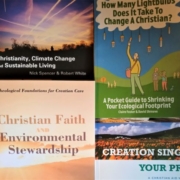
If you’re new to these explorations, why not try the Tearfund video below. Then you might want to look at one of the books by David Bookless or the Hodsons, James Jones’ Jesus and the Earth, the reflections from David Osborne and Ghillean Prance, or the CAFOD study guide to Laudato Si’. You might also want to look at our lists of sermons, Bible studies and Lent courses.

Why don’t you list …? 

This is a list in progress. If you have suggestions, email them to us at ccowemails@ccow.org.uk.

Want more?

Hannah Malcolm has a brilliant reading list – and there’s another good reading list on A Rocha’s website.

An Introductory Video

Tearfund has a brilliant new introduction – take a look. It’s part of a series of videos for churches on how Christians can engage with climate change: you can find the full series here

What the Bible says about the natural world from Tearfund on Vimeo.


A short reading list

Richard Bauckham, Bible and Ecology: Rediscovering the Community of Creation (DLT, 2010)  What does the Bible say about humanity’s relationship to God and the rest of the created order? A beautifully written exploration that calls us to rediscover our place as created beings and our specific role in creation’s praise of God.

Professor R J (Sam) Berry. “The Biblical Basis for Creation Care” (JRI Briefing Paper 8) A concise, 4 page summary of the Christian responsibility to care for creation which also includes a useful summary of different creation theologies.

Dave Bookless, Planetwise: Dare to Care for God’s World (IVP, 2008) What does it mean to look at creation in the light of the whole Bible story – from creation to new creation? And how does that change the way we care for the earth? Designed to be used for individual reflection or small group study, with questions at the end of chapters. Accessibly written and engaging. There’s also a good video introducing the concepts behind A Rocha and Planetwise here: https://www.youtube.com/watch?v=Ql4mr6ykDFQ. If you like this book, you might also try Bookless’ God Doesn’t Do Waste (IVP, 2010).

Dave Bookless, “The Earthly Jesus and the Cosmic Christ” (The Kirby Laing Institute for Christian Ethics, Working Paper No 1, 2016)  What does Christ’s lordship mean for the whole of the created order? An important contribution to a New Testament ecological theology. Free to download here.

Celia Deane-Drummond, A Primer in Ecotheology: Theology for a Fragile Earth (Cascade, 2017) An introduction to different forms of ecotheology, with a section on the Catholic teaching embodied in Laudato Si’. You might also want to look at the author’s  Eco-Theology (DLT, 2008) an academic text which goes into greater detail.

Vigen Guroian, Inheriting Paradise: Meditation on Gardening (Eerdmans, 1999) and The Fragrance of God (Eerdmans, 2006). A  leading Orthodox theologian offers a mixture of personal and theological reflection, helping us to reflect about ourselves, creation and the Creator.

Peter Harris, Under the Bright Wings (Regent College Publishing, 1993, repr 2000) and Kingfisher’s Fire: A Story of Hope for God’s Earth (Monarch, 2008). Two books by the co-founder of A Rocha, Peter Harris, exploring its roots and its growth – with a focus on conservation and care for the earth. Audio excerpts from Under the Bright Wings: https://www.arocha.org/en/resources/audio-under-the-bright-wings/

Martin and Margot Hodson, eds. Environment and Hope, Anvil 29.1 (2013) – A collection of short essays by  theologians, scientists and activists responding to the question – how do we define an authentic Christian hope in the Anthropocene age?   Available free online: https://content.sciendo.com/view/journals/anv/29/1/anv.29.issue-1.xml

Martin and Margot Hodson, Cherishing the Earth (Monarch, 2008) and A Christian Guide to Environmental Issues (BRF, 2016, rev ed coming in April 2021). Two excellent introductory works, both of which have associated study materials for small group study.

James Jones, Jesus and the Earth (SPCK, 2003) – What does Jesus say about creation? The former Bishop of Liverpool looks at the question, reflecting on the way in which the Gospels, as well as the Hebrew Scriptures, offer insights into the way Christians should look at the earth and their role in caring for it. Short and accessible, useful for group study.

Jurgen Moltmann, God in Creation (Fortress, 1993)  One of the leading systematic theologians of the 20th century explores the relationship between the Trinity and creation.  What does creation mean to God? How are the different persons of the Trinity involved? What is the relationship between creation and God’s Kingdom? Not one for beginners – but highly influential.

Michael Northcott, The Environment and Christian Ethics (CUP, 2008)  A comprehensive survey of Christian thinking on environmental ethics, which explores the views of God, humanity, and the created order that  underlie different ethical frameworks. Weighty, but readable – and wonderful for provoking thought.

Pope Francis, Laudato Si’: The encyclical itself weaves a Franciscan sense of the ways in which creation reflects God’s love with analysis of economic, social and environmental injustices to produce an ‘integral ecology’. CAFOD’s study guide (available for download online) is an accessible way of engaging with a complex work.

David Osborne, Love for the Future: A Journey (Wild Goose Publications, 2013). A beautifully written, lyrical account of a walk from Shropshire to Iona, contemplating the landscape and being led from that to contemplation of our relationship with God, the planet, and each other.

Sir Ghillean Prance, Go to the Ant: Reflections on biodiversity and the Bible (Wild Goose Publications, 2008)  Sir Ghillean was Scientific Director of the Eden Project,  Director of the Royal Botanic Gardens at Kew. His engaging and accessible book links references to creation in the Bible with stories drawn from his many decades exploring creation in different parts of the earth.

Ruth Valerio, Saying Yes to Life (SPCK, 2019) – Archbishop’s Lent Book for 2020. Uses the story of creation found in Genesis 1 as a starting point to explore the theology and practice of creation care. The aspects of creation – earth, water, etc –  are explored: how does each one appear in Scripture? What is happening to each in our modern world?  And how can we respond to the crises creation faces? Helpful blend of theological reflection, case studies, and suggestions for practical action.

Rowan Williams – Christ the Heart of Creation  (Bloomsbury Continuum, 2018) How do we “think about the relation between God and what God has made”? A survey of thinking around the relationship between Christology and the doctrine of creation. Complex, deep and worth wrestling to understand.
Environment-related Lent Reflections, Carbon Fasts, Lent Courses, and Bible Studies

Why should Christians care about the environment? Does God give us guidance for creation care in Scripture? To answer such questions, we turn to the Bible, seeking to discern God’s will.

We’ve gathered here some materials for Bible study. Most are online and free to download, but we’ve included some that require purchases as well. This list has been updated for Lent 2024.

Lent daily resources


40 Days With God’s Creatures
(Sarx, Lent 2021, app updated for 2022)
We profess a faith in Jesus, and we love animals. But do we put the two together? This Lent guide from Sarx, available as an online app, “offers users the chance to reflect theologically and creatively about animals and animal issues, using biblical and theological readings, art, videos, music, photography and poetry.” Contributors to the daily reflections include Professor David Clough, Professor Celia Deane-Drummond, Professor Matt Halteman and Professor Michael Gilmour.


(Anglican Communion Environmental Network, for Lent 2021 )
Five weeks worth of short, bite-sized suggestions for more sustainable living, and reflections each day of Holy Week.


Daily Reflection-Action Calendar to Cultivate Climate Justice
(Creation Justice Ministries, 2024)
A simple, one-page calendar with a suggestion for each day – from doing your carbon footprint to watching an environmentally themed film or making goods from recycled materials


Daily Reflections for Creationtide
(Amica Benefice/JRI/Diocese of Lichfield/Season of Creation – 2018)
Not new this year. Not written for Lent. So what’s it doing in this list? Put simply, people have found it one of the most helpful sources of daily reflections on creation care – each with a simple question to inspire further reflection.


Stubborn Hope
(Ignatian Solidarity Network, for Lent 2026)

“In a world where polarization deepens and injustice runs rampant, pressing on with hope can be draining and challenging. But faith and hope must be stubborn in the face of these challenges. Breaking open the 2025 Ignatian Family Teach-In for Justice theme of “Pressing On”, Michael Libunao-Macalintal asserted:
“Hope is a stubborn thing — it pushes past doubt and despair, it barrels its way through our confusion and suffering. It lights itself in us when all feels lost, when we are dealing with the rubble of what once was, when we must dig ourselves in and try again.
…Hope doesn’t burn out, it doesn’t give up— hope doesn’t know how to give up. Hope is stubborn. And make no mistake, friends, we are stubborn people.”

Sign up to receive daily emails around this theme. Prior themes, such as 2021’s

Steadfast: A Call to Love  are also archived on the site.


Less Is More: A Lenten Guide for Personal Renewal
(Kai Nilsen, Renovare, 2013)
A free book to download, which invites you to reflect and make a journal as you go through Lent. Each week has a theme of less and more: less guilt/more grace (confession), less noise/more listening (solitude), less consumption/more compassion (fasting), less stuff/more freedom (simplicity), less spending/more peace (frugality), less me/more others (intercession), less fear/more love (responding to Holy Week).


Presbyterians for Earth Care – 2026 Lenten Devotional
(Downloadable at link above – weekly reflections)
Reflections for Ash Wednesday, each Sunday in Lent, Maundy Thursday, Good Friday and Easter. Each is by a different author and contains a Bible reading, reflection, and short prayer. Helpful for personal reflection, or could be a starter for a weekly home group’s discussions. This page holds all the Lent resources since 2017.


Planting Seeds of Hope: 40 Devotions on Creation
(Green Anglicans, for Lent 2021)
A wonderful collection of daily reflections and prayers, contributed by Green Anglicans, members of the Anglican Communion Environmental Network, the Anglican Indigenous Network, The Lusophone Network, Together 4 Creation and contributions from the Sustainable Preaching Network (www.sustainable-preaching.org). Dedicated to the memory of Bishop Ellinah Wamukoya.

Lent courses


In addition to the resources below, we heartily recommend two sources of weekly lectionary-linked reflections: Creation Justice Ministry’s Green Lectionary Podcast, in which theologians and environmentalists discuss the weekly readings, and Preaching for God’s World, which offers weekly creation-related sermon notes, and often a model sermon.

A Christian Look at the Environment
(JRI, 2023)
“This series of five bible studies have been written for the John Ray Initiative in 2023 by Revd. Rich Clarkson, and is based on a popular earlier series of bible studies written by Dena Burne in 2002 (the latter have now been withdrawn). It draws on both theological and scientific insight to help groups and churches think about what a Christian approach to environmental issues might look like. These are an ideal set of group studies for the Season of Creation or for a Lent Course, but could be used at any time.”


Calling a Wounded Earth Home
(Green Christian, 2024)

“Inspired by Green Christian’s Deep Waters Course, [this] asks ‘What kind of people might we need to be to face the challenges of climate change?’

Here is a space to go deeper together, and a space of contemplation that can resource meaningful action.

Covering topics of Love, Truth, Wisdom, Justice and Hope, this course uses music, prayer and Bible texts to inform reflection and discussion on creation care and the climate crisis, with the potential for positive and grounded outcomes for both community and church. It is discussion based with little input “from the front”, trusting that there is expertise, experience and faith enough in the room.”


Caring for Creation
(York courses, Lent 2021 – course)
“The human race is facing its greatest challenge: global warming, leading to climate change. This, along with the damage we have done, and are still doing to the environment, God’s wonderful creation, means that we all have to make radical changes to our whole way of life.” A course which presents facts about the challenge of climate change – but seeks to inspire hope for the future, based on faith.  Contributors include Dave Bookless, David Clough, Brian Davis, Lalbiakhlui Rokhum, Simon Stanley and Ruth Valerio.


Preaching Creation Crucified
(EcoCongregation Scotland, 2026)
Lectionary-linked video reflections from the EcoCongregation Scotland team.


Five sessions, based around Laudato Si’, with a focus on biodiversity and ecosystems.


*For Such a Time as This
(USPG, for Lent 2021 – short course)
Our world is in environmental crisis: how can Christians respond? This six-session course offers a biblical narrative of salvation to frame our climate response and challenges all Christians to take part in God’s work of redemption and re-creation. The sessions draw on perspectives from USPG’s partners around the world. Each contains a reflection, Bible passage to study, prayer and call to action.


(World Council of Churches, 2024)
Series of seven reflections written by theologians from different countries and reflecting on the meaning of water, and of peace, in different contexts.


Talking Climate Justice
(Christian Aid, published 2022 for Lent 2023)
A discussion guide for small groups. “This Lent reflect on the transformative nature of our faith and seeking justice. In this 6 week Talking Climate Justice small group discussion guide you’ll explore Lenten themes (repentance, sacrifice, redemption, reparation and restoration) to help you grapple with the realities of the climate crisis. Each week you’ll explore a new theme with bible readings, stories and prayers to stir up ideas of how you and your church can act together for climate justice. “

Carbon Fasts

Climate Stewards’ 2026 Carbon Fast
Encourage individuals and congregations to take action to engage more fully with creation … as well as cutting their carbon footprint. Excellent posters for each week, with suggestions for a key activity. Simple and clear, from a leading UK environmental charity.

A Sustainable Shift
Green Anglicans’ 2025 Carbon Fast offers practical and prayerful suggestions, one for each day – from reflecting on where we have fallen short of the mark to doing litter pick-ups, going light on plastic, and minimising food waste. Previous carbon fasts are also available. Look for the links on the side …

Multi-Session Courses (teens and adults)

(C) indicates a particular focus on climate, (B) a particular focus on biodiversity
A * before the title indicates materials that would be particularly good for congregations just beginning their journey.


*A Christian Guide to Environmental Issues
(Margot and Martin Hodson, 2008)

“A valuable resource to help understand how we can live together for the good of all creation on this one planet with its finite resources. As such this book looks straight in the eye of the most serious set of environmental challenges humanity faces. Drawing together in accessible ways scientific evidence, biblical reflection, and practical ideas it will provoke you to better think, act and pray for the renewal of creation.” These were the Bishop of Norwich’s words commending the Hodsons’ excellent introduction. Chosen as ‘The Big Church Read’ it now has ten videos with starter discussions questions to accompany it.


*Cherishing the Earth
(Margot and Martin Hodson, 2008)

Six online Bible studies derived from the book of the same name, published by BRF. Can be used with or without the book.  Each study has materials for discussing the theme, reflecting on particular passages, prayer, and practical applications. Themes are: Why cherish the earth, how to care biblically, careless dominion, impact on the poor, redressing the balance, and the future. Excellent introduction for churches beginning their explorations.

*Climate Change and the Purposes of God
(Operation Noah)
Operation Noah’s ‘Ash Wednesday Declaration’ challenged the Church to recognise that care for creation in general – and responding to climate change in particular – is a key part of Christian mission. It did this by framing the challenges and responses to climate change in the light of seven Biblical themes: finding joy in creation, listening to the prophets, repentance, taking responsibility, seeking justice, loving neighbours, and acting with hope.  The five sessions of this study pick up those themes – each includes material from the Declaration, a Bible passage relating to it, and suggestions for discussion and action. This study is no longer on Operation Noah’s website; contact us for materials.


*Exploring God’s Green Word
(Studies originally written by Revd Dr David Pickering of the URC for ‘Roots and Branches’, modified for A Rocha Canada)
Five Bible studies that explore what different parts of Scripture – Genesis, the Pentateuch, Psalms, the Gospels, and the New Testament Letters – have to say about God, creation and humanity. Accessible, single page sessions have suggested Bible passages, background to the passages, discussion starters on the theological themes the passages raise, and a challenge to take away. (Click on Bible studies in the accordion on the left of the page to find the materials)


Mission and Creation Care for Christian Disciples
(Written by the Revd John Weaver for JRI and Tearfund)
Five sessions that aim “to mobilise congregations and churches in living out the mission of God and to see individual lives, communities, and the environment flourish. A core feature of this is to challenge congregations and communities in the UK to change their values from individual consumerism to justice and sustainability both locally and globally.” Sessions cover renewing our understanding of mission; the call to care for creation;  the challenge to sustainable lifestyles;  a biblical approach to economics; and the Church’s role as an agent of change.” Downloadable as A4 booklet.


Plenty
(A project of Green Christian, 2020)
What kind of world do we want to see emerge after the coronavirus pandemic? This seven-session course offers space to reflect on that question from a Christian perspective. Each session has a theme, which is explored in liturgy, conversation and reflection. The course isn’t a ‘Bible study’ course in the customary sense – so some of the passages for reflection are Scriptural and others are drawn from secular sources.


Radical Presence
(A project of Green Christian, 2020)
What kind of world do we want to see emerge after the coronavirus pandemic? This seven-session course offers space to reflect on that question from a Christian perspective. Each session has a theme, which is explored in liturgy, conversation and reflection. The course isn’t a ‘Bible study’ course in the customary sense – so some of the passages for reflection are Scriptural and others are drawn from secular sources.


Saying Yes to Life 
(Ruth Valerio – Archbishop of Canterbury’s Lent Book 2020)
Saying Yes to Life follows the creation story in Genesis 1. Each chapter explores the element of creation from a given day (earth, waters, etc) – following references to it throughout the Bible, looking at how it is affected by the current environmental crisis, and offering suggestions for prayer and action to protect it.  Mingling theological reflection and case studies drawn from different global contexts, the book offers a rich mix of things to ponder. There’s quite a lot of material, so it may be better for people who are already engaged.  SPCK produced some very engaging videos to accompany the book – you might want to take a look at these just on their own.


*Tenants of the King
(Operation Noah)
“Tenants of the King is a new Bible-based, Jesus-centred resource… designed to help you and your church consider what the Bible has to say about today’s climate crisis.” Particularly useful for congregations which may not be used to thinking of climate as a Christian issue.

The full study guide includes booklets with materials for four 1-hr interactive group sessions; video interviews* with Rt Revd. Graham Tomlin (Bishop of Kensington), Rev. Mark Melluish (New Wine), Dr Ruth Valerio (Tearfund) and Dr Justin Thacker (Cliff College); and Leaders’ Notes.

Single copies of the booklets can be ordered on the Operation Noah website (£2.99 each); for information on full multimedia study guide email admin@operationnoah.org.* Note – Single booklet orders do not include access to videos.


Studies and courses for young people

All Things
(Young Evangelicals for Climate Action)
Six theological reflections with questions for discussion.